The chair (and most other objects) is incidental to the movement.
This is a video representation of Tip 34, and the last in a video series on Inhibition and Direction. To get an idea of what is going on here, also take a look at Tips 31, 32, and 33.
Or, for a more practical approach:
Three Tips on Bending
There are more resources available on the Free Your Neck Blog. Please write your requests in the comment section.
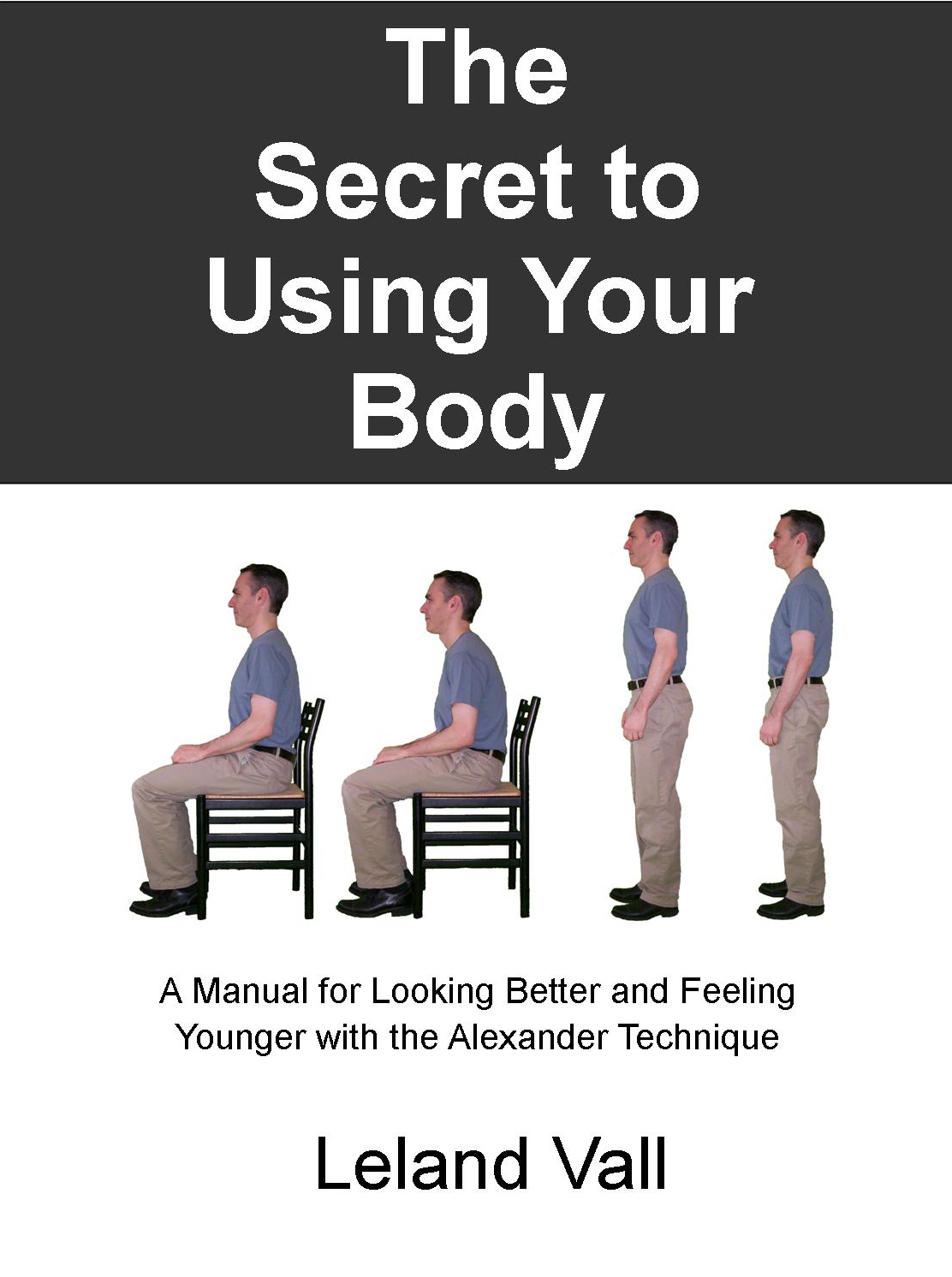
Buy The Secret to Using Your Body
I drive a car that is quite low to the ground. Is there a correct way to get out of the car and not look clumsy?
It’s not about avoiding a clumsy look, it’s about being effective and efficient in what you are doing. I don’t have anything about getting out of a car, but I do have one for getting out of a modern chair, which I think is similar. https://freeyourneck.com/blog/alexander-technique-tip-93-how-to-get-out-of-a-modern-chair/
Pingback: Alexander Technique and Spirituality – Notes on My Alexander Lessons
So,
i should not sit and SIT in the chair.
I will try to sure remember this
Am I correct in thinking that one must use their leg muscles to sit down
and get up from a chair in order to keep the back from bending or
otherwise doing the work? One must have strong muscles in the legs as
well as good knees. How should I make these muscles stronger?
Hi Joanne,
Regarding your first question, people often ask which muscles to use for a particular task. For sitting in a chair (or really any movement) it’s not about using your back or your legs because everyone always uses the whole body the whole time. You are already using your back and your legs (and the rest of your body) to sit in or rise from a chair. The point of the Alexander Technique is to learn to use your body in a way that is coordinated and organized, and not haphazard.
For your second question, the general strength of the body usually reflects how it is used. The person who climbs stairs generally becomes stronger at climbing stairs. As you attempt to sit in a chair without falling into the chair, you will probably become stronger in that way.